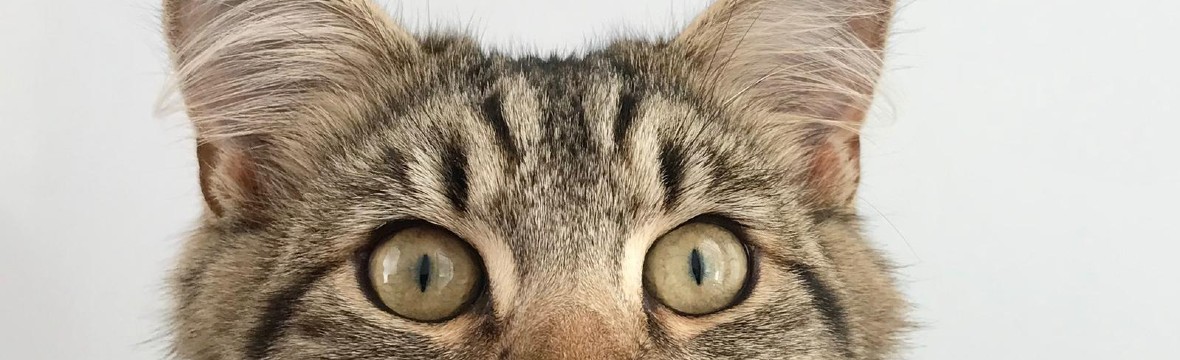
Let’s talk feline osteoarthritis also known as degenerative joint disease or DJD.
Our soon to be 13 year old Hula was recently diagnosed with feline osteoarthritis (OA) so this is the perfect opportunity to write about the telltale signs your cat might be suffering and potentially experiencing OA related pain.
As you all know, cats are masters at disguising pain and discomfort which makes diagnosing any illness in its early stages quite tricky. Usually by the time we notice a marked difference in our cats, the malaise has already progressed and taken hold.
According to one study by Hardie et al., 90% of cats over the age of 12 show signs of osteoarthritis in one or more joints when scanned, “even though only 4% of these had any mention of arthritis by either owner or veterinarian.” Another study by Slingerland et al., showed that 61% of cats older than 6 years had radiographic signs of OA in one joint and 48% had changes in multiple joints.
With statistics like this, it’s important we do everything we can to pick up on the early signs of it so we can get the required help from a vet as early as possible to avoid pain and suffering in our cats. Some of the behavioural changes to look out for:
* Changes in mobility which can be very subtle at the start. This can be a reluctance to use the stairs or jump onto furniture or kitchen counters etc. Your cat might take much more time to go up and down the stairs. One of the signs is “bunny hopping” up and or down with both hind legs at the same time or going down the stairs sideways.
*A stiffness and changed, unsteady gait, especially when rising from rest.
*Changes in overall activity levels. A reluctance to play or a need to rest more frequently during play.
*Changes in hunting and play behaviour. No longer interested in chasing after “prey”, be that live prey or toys.
*Changes in social behaviour. Less keen on being handled and less interaction with humans and other animals in the household.
*Increased resting and sleeping.
*Favouring beds lower to the ground.
*Restlessness.
*Difficulty grooming coat and keeping rear end clean.
*House soiling. Refusal to use the litter tray and soiling in unusual places or missing the tray.
*Reluctance to use the cat flap and spending less time outside.
*Reduced use of scratch post, leading to overgrown claws.
*Aggression towards owners when touched, picked up or stroked.
*Aggression towards other pets in the home.
*Increased vocalisation.
If your cat is showing any signs of OA contact your vet for advice. They will help you monitor your cat’s behaviour and help manage the condition.
In Hula’s case, I noticed the changes very early on so she wasn’t in pain yet but was starting to show signs of discomfort, stiffness and a very subtle change in her gait. She sat ever so slightly differently. She also became reluctant to jump on the kitchen counter during feeding time.
To make Hula’s life easier and better, I’ve put some practical measures in place. I created a quiet corner for her in our bedroom and put a comfy bed hidden under a blanket-covered bench so she can retreat and rest, away from the other cats, especially “Les Enfants Terribles”, Bill & Ted. I’ve also provided little steps where I think she might need one to get better access to high-up places she still loves to hang out on and bought her some raised food bowls to reduce the pressure on her spine and hips.
We have also provided her with a low level litter tray so she doesn’t need to go outside if she doesn’t want to.
In Hula’s opinion, the best thing I have done for her is given her a gifted heated pad by @petremedy in her bed. The girl looks so happy, comfy and toasty in that bed I’m kinda envious. Hula’s pain/discomfort is being managed with a monthly, injectable non-steroidal drug called Solensia and seems to be responding well to the treatment so far. She’s due her second injection in 2 weeks time, when I will be shown how to administer the injection myself at home so she won’t have the stress of regular vet visits.
References;
Hardie EM, Roe SC, Martin FR. Radiographic evidence of degenerative joint disease in geriatric cats: 100 cases (1994–1997). JAVMA. 2002;220(5):628-632. doi:10.2460/javma.2002.220.628
Slingerland LI, Hazewinkel HAW, Meij BP, Picavet P, Voorhout G. Cross-sectional study of the prevalence and clinical features of osteoarthritis in 100 cats. Vet J. 2011;187(3):304-309. doi:10.1016/j.tvjl.2009.12.014

 Marjan Debevere - The London Cat Behaviourist
Thank you for this. Joy was diagnosed yesterday after a couple of days where an unknown issue was exacerbated by shifting her food bowl up much higher because my mother lost her balance and fell on Tuesday while feeding her on the floor. Poor baby hurt. Got her first shot of Solensia yesterday and has one more pain pill left. Still not herself yet, but I’m hopeful. Audrey got a shot for her back yesterday, so she’s more comfortable bending over. We’re going to have to find a happy medium somewhere. And I’ll get her a heated pad.
LikeLike
Thank you so much for the info. I will keep an extra eye on my little guys! I’m so glad for Hula! She has the best mom ever!
LikeLike
Hi! Could you tell us what are the specific tests needed to diagnose OA? Our 13 year old chubby cat suffers from feline hyperesthesia syndrome (FHS) that may be caused by OA and we would like to search it more. Thanks in advance!
LikeLike
Hi, you will need to speak to your vet. I’m not qualified to give medical advice like this.
LikeLike
Yes, I understand. Our cat is constantly monitored for his problems but we keep hearing so many diverse things about the tests needed for OA. Thank you again!
LikeLike